Most smoothie blogs work the same way. You search "smoothie for energy," find a recipe with bananas, spinach, and almond milk, and blend it without knowing why those ingredients were picked, how they interact, or whether they actually support the goal in the title. The recipe might be fine. It might also be a random combination that someone thought tasted good and slapped a health claim on. This post takes a different approach. Instead of handing you a recipe and hoping you trust it, we'll walk through how to choose smoothie ingredients based on what you're actually trying to support — and how to verify the nutrition before you blend.
Why "Smoothie for X" Recipes Miss the Point
Search for "smoothie for immune support" and you'll find dozens of recipes. Most share a pattern: they list 4–6 ingredients, mention that one of them contains vitamin C, and call it an immune-boosting smoothie. The problem is that a single ingredient containing vitamin C doesn't make the whole smoothie an immune-support drink. What about the other ingredients? How much of each are you using? What's the total vitamin C in the combined recipe — and does it actually cover a meaningful portion of your daily need? Recipe blogs can't answer these questions because they publish static content. The nutrition was calculated once (if it was calculated at all), for one specific portion size, and it never updates when you swap an ingredient or change the amount. This is the gap between a recipe and a tool. A recipe tells you what to blend. A tool lets you see what you're blending — in real time, with actual numbers.
Start With a Goal, Not a Grocery List
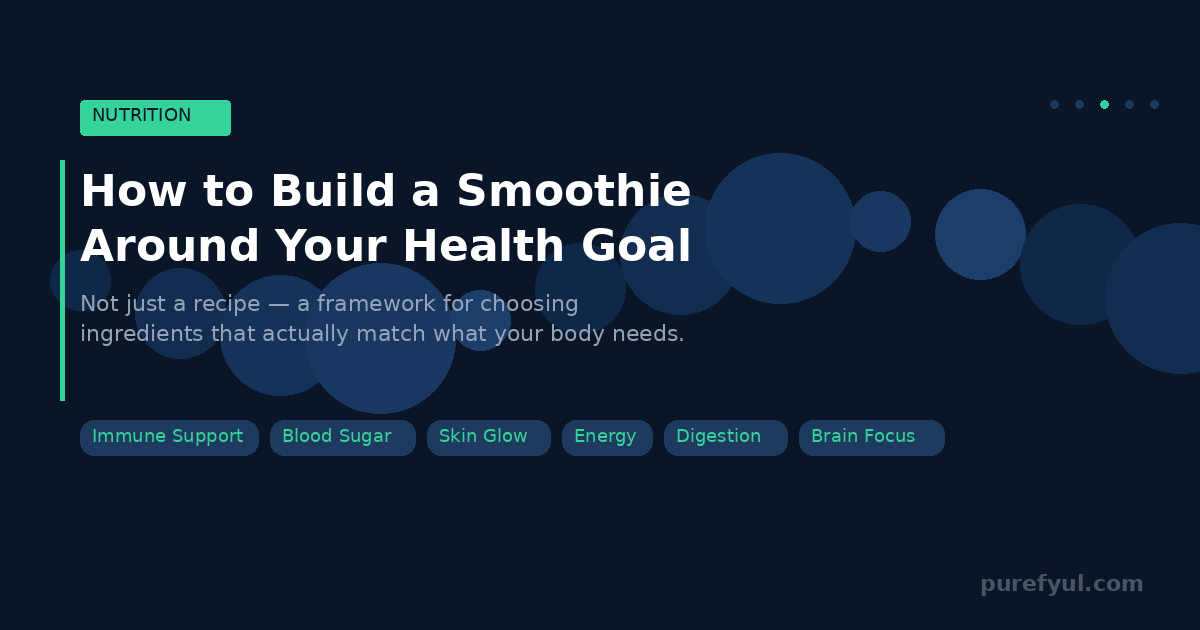
The most useful shift you can make in how you think about smoothies is this: start with the outcome you want, then select ingredients that support it. Instead of browsing recipes and hoping one matches your needs, start by identifying your health goal. PureFyul currently supports over 20 goals, but here are six of the most common ones people build smoothies around — and the ingredient logic behind each.
Immune Support
When people search for immune-supporting ingredients, they're usually looking for foods rich in vitamin C, zinc, and antioxidants. These micronutrients play documented roles in immune function, and several common smoothie ingredients contain them in meaningful amounts. Ingredients to start with: Strawberry, blueberries, kale, spinach, flaxseed. Strawberries and blueberries are common choices because they contain vitamin C alongside anthocyanins — a type of antioxidant that gives berries their color. Kale and spinach contribute vitamin A and additional vitamin C. Flaxseed adds omega-3 fatty acids, which have been studied for their role in supporting immune response. The mistake most recipes make here is loading up on fruit and calling it done. A smoothie with three fruits, juice as the base, and no protein or fat will deliver vitamins — but it'll also deliver a sugar load that spikes your blood glucose. Adding a source of healthy fat like avocado or fiber like chia seed slows digestion and helps your body absorb fat-soluble nutrients like vitamin A more effectively. Explore this goal: Immune Support on PureFyul
Blood Sugar Support
This is the goal where ingredient precision matters most. People managing blood sugar — whether for diabetes, insulin resistance, or general metabolic health — need to know exactly how much sugar, fiber, and protein is in their smoothie before they drink it. A "low sugar smoothie" recipe that doesn't list grams of sugar per serving is not useful. Ingredients to start with: Spinach, avocado, chia seed, flaxseed, blueberries (limited portion). The logic here is straightforward: prioritize ingredients that are high in fiber and healthy fats, moderate in protein, and low in sugar. Spinach and avocado are the backbone — they contribute nutrients without spiking glucose. Chia seeds and flaxseed add fiber that slows sugar absorption. Blueberries provide flavor and antioxidants, but the portion matters — 40g of blueberries has a very different sugar impact than 150g. This is where PureFyul's real-time nutrition tracking becomes critical. As you add each ingredient, you see the cumulative sugar, fiber, and carbohydrate totals update. You can adjust blueberry portions from 100g down to 50g and watch the sugar total drop in real time. No recipe blog offers this because they can't — they're static pages, not interactive tools. PureFyul also caps fresh fruit at 3 per smoothie and dried fruit at 1. This isn't arbitrary. It prevents the common mistake of blending banana, mango, pineapple, and dates into a "healthy" smoothie that contains 50+ grams of sugar — more than a can of soda. Explore this goal: Blood Sugar Support on PureFyul
Skin Glow
Skin-focused smoothie searches tend to center on vitamin C (collagen support), vitamin E (skin barrier protection), and omega-3 fatty acids (reducing inflammation that shows up as dullness or breakouts). Ingredients to start with: Strawberry, blueberries, avocado, spinach, flaxseed. Avocado is the standout here — it provides vitamin E and healthy fats that support skin hydration from the inside. Berries contribute vitamin C, which the body uses in collagen synthesis. Spinach adds vitamin A, which is involved in skin cell turnover. Flaxseed provides ALA (alpha-linolenic acid), an omega-3 fatty acid that helps reduce skin inflammation. Most "smoothie for skin" recipes list ingredients without explaining the mechanism. They'll say "add avocado for glowing skin" without telling you that the relevant nutrient is vitamin E, that the recommended daily amount varies by age, and that the 30g of avocado in their recipe might contribute less than you expect. When you build this smoothie in PureFyul, you see exactly how much vitamin E, vitamin C, and omega-3 each ingredient contributes to the total. Explore this goal: Skin Glow on PureFyul
Energy and Stamina
"Smoothie for energy" is one of the most searched smoothie queries, and also one of the most abused. Many energy smoothie recipes rely on sugar — banana, mango, honey, orange juice — which gives you a quick spike followed by a crash. That's not sustained energy. That's a sugar rush. Ingredients to start with: Oats, banana, peanut butter, spinach, flaxseed. Sustained energy comes from a combination of complex carbohydrates, protein, and healthy fats. Oats provide slow-releasing carbs and B-vitamins that support energy metabolism. Banana adds natural sweetness and potassium (important for muscle function). Peanut butter contributes protein and fat that slow digestion. Spinach adds iron — a mineral directly involved in oxygen transport, and one that's commonly low in people who report fatigue. One banana is fine. Three bananas plus honey plus juice is a sugar smoothie wearing a health costume. PureFyul lets you build with one banana and immediately see where the sugar total lands. If it's already at 20g, you know adding mango would push it past 35g — and you can make that decision with data, not guesswork. Explore this goal: Energy & Stamina on PureFyul
Digestive Support
Digestive health smoothies revolve around fiber and gentle, easy-to-digest ingredients. People searching for digestive support are often dealing with bloating, irregularity, or general gut discomfort — and the wrong smoothie can make it worse. Ingredients to start with: Banana, oats, chia seed, spinach, greek yogurt. Banana provides soluble fiber and is easy on the stomach. Oats add beta-glucan, a type of soluble fiber that supports gut bacteria. Chia seeds absorb liquid and form a gel that slows digestion and promotes regularity. Greek yogurt adds protein and, in many varieties, live cultures that support gut microbiome diversity. The trap with digestive smoothies is overloading fiber. Going from a low-fiber diet to a smoothie with 15g of fiber in one sitting can cause the bloating and discomfort you were trying to fix. PureFyul shows cumulative fiber in real time. If your smoothie hits 10g of fiber and you're just starting to increase your intake, that's useful information — you can scale back one ingredient instead of discovering the problem after you drink it. Explore this goal: Digestive Support on PureFyul
Brain Focus
Cognitive function is linked to several nutrients: omega-3 fatty acids for brain cell membrane health, antioxidants for reducing oxidative stress, and B-vitamins for neurotransmitter production. Smoothies targeting brain focus should combine ingredients that deliver these nutrients without excess sugar, which can impair concentration. Ingredients to start with: Blueberries, spinach, avocado, flaxseed, oats. Blueberries are one of the most studied foods for cognitive benefit — their anthocyanins have been researched for effects on memory and concentration. Spinach provides folate and iron, both involved in cognitive function. Avocado delivers healthy monounsaturated fats. Flaxseed contributes omega-3s. Oats provide steady glucose release instead of the spike-and-crash pattern that disrupts focus. This combination is intentional — it prioritizes fats, antioxidants, and slow-release carbs over sugar. A "brain boost smoothie" that relies on mango, pineapple, and honey will temporarily raise blood glucose (which might feel like alertness) but then drop it an hour later, leaving you less focused than before. Explore this goal: Brain Focus on PureFyul
The Pattern You Should Notice
Across all six goals, the same principles repeat: Every goal benefits from vegetables, not just fruit. Spinach appears in five of six examples above — not because it's trendy, but because it's nutrient-dense, low in sugar, and mild enough to blend into anything. Every goal requires controlling sugar. Not eliminating it — controlling it. One fruit is usually fine. Three fruits plus a sweetener is where most smoothies go wrong. PureFyul enforces fruit limits and shows sugar totals specifically to prevent this. Every goal benefits from fat or protein alongside carbohydrates. Adding avocado, chia seeds, flaxseed, or peanut butter isn't optional — it's what turns a sugar drink into a balanced meal. No static recipe can adapt to these principles dynamically. A tool can.
How to Use PureFyul for Goal-Based Smoothies
If you want to build a smoothie around a specific health goal, here's the process: Open the PureFyul smoothie builder and select an audience (your age group). Then choose a health goal — Immune Support, Blood Sugar Support, Skin Glow, or any of the 20+ goals available. The tool will suggest ingredients associated with that goal. Start adding ingredients. As you add each one, you'll see exact gram portions adjusted for your selected audience, real-time nutrition totals including calories, protein, carbs, fat, fiber, and sugar, allergen flags if any ingredient contains common allergens, and a fruit counter that caps at 3 fresh or 1 dried. If the sugar total is climbing too high, swap a fruit for a vegetable. If protein is too low, add greek yogurt or peanut butter. If you're unsure about a single ingredient, check it first in the Ingredient Analysis tab before adding it to your smoothie. You can also browse the full Ingredient Directory or the Health Goals Directory to explore what's available before you start building.
What This Isn't
This is not medical advice. PureFyul provides educational nutrition information to help you make more informed choices about what goes into your smoothie. It is not a substitute for working with a doctor, dietitian, or allergist. If you have a medical condition — especially diabetes, food allergies, or a disorder that requires dietary management — please consult your healthcare provider before making dietary changes based on any blog post, including this one. The goal of this tool is to give you data so you can make decisions with your practitioner, not to replace them.
Try It
The PureFyul smoothie builder is free and requires no signup. Pick a health goal, add ingredients, and see exactly what you're about to blend — with real nutrition numbers, allergen checks, and age-appropriate portions. If you found this useful, share it with someone who's been copying random smoothie recipes without knowing what's actually in them. There's a better way to build a smoothie, and it starts with knowing what you're building it for.